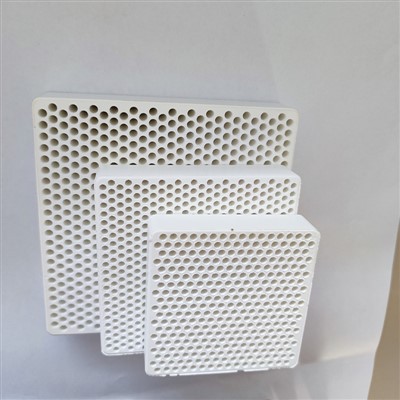
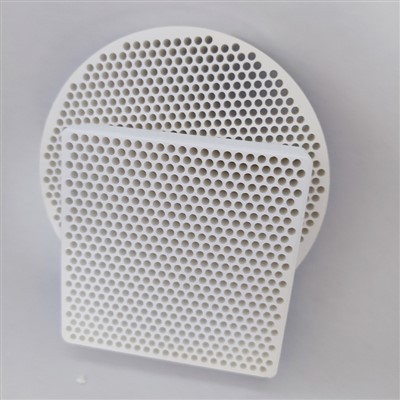
Extruded Ceramic Filter

Product Overview


Extruded ceramic filters are porous honeycomb structures installed in gating systems to remove non-metallic inclusions from molten metals during casting. By converting turbulent flow into steady laminar flow, these filters eliminate oxide scale, slag, and sand particles, minimizing casting defects such as macro-inclusions, gas porosity, and surface blemishes.


Engineered for high-integrity iron, steel, and non-ferrous alloy foundries, these components withstand severe thermal shock and direct metal impact during high-velocity pouring operations.


Material & Construction

Manufactured through a precision hydraulic extrusion process, our filters utilize high-purity refractory raw materials formulated for specific melting environments.


Cordierite (Mg2Al4Si5O18): Standard formulation for grey iron and low-alloy ductile iron castings. Offers ultra-low thermal expansion and high thermal shock resistance up to 1400C.


Zirconia (ZrO2): Engineered for steel, stainless steel, and high-alloy iron castings. Withstands pouring temperatures up to 1700C with exceptional chemical resistance against reactive molten steel.

Silicon Carbide (SiC):

Deployed in ductile iron, copper, and thick-section iron castings where high mechanical strength and rapid thermal conductivity are required. Operating limit up to 1500C.

Alumina (Al2O3):

Utilized primarily for aluminum, magnesium, and high-temperature alloy casting applications.

Visual Reference:

Microscopic cross-section views and pore structure magnification diagrams are embedded in the downloadable CAD/PDF package to verify wall thickness uniformity and cell geometry.


Filtration Characteristics
01.

Flow Dynamics:

Honeycomb channel geometry converts turbulent liquid metal flow into steady, laminar flow, minimizing re-oxidation and mold erosion.

02.

Inclusion Trapping:

Surface filtration mechanisms capture macroscopic inclusions larger than channel dimensions, while tortuous inner walls capture sub-micron particles via cake filtration and adsorption.

03.

Thermal Shock Stability:

Rapid expansion coefficient below 2.0 x 10^-6 / K (Cordierite grade), preventing spalling upon immediate contact with molten metal streams exceeding 1350C.

04.

Hydraulic Resistance:

Open frontal area ratios ranging from 65% to 80%, ensuring minimal pressure drop and unhindered mold filling speeds.


Applications


Alloy Type

Filter Material

Typical Pouring Temp (C)

Primary Application Focus

Grey & Ductile Iron

Cordierite / SiC

1320 - 1420

Engine blocks, brake discs, hydraulic valves

Carbon & Alloy Steel

Zirconia

1550 - 1680

Steel castings, railway components, turbine housings

Aluminum Alloys

Alumina / Cordierite

680 - 750

Automotive wheels, aerospace structural parts

Copper Alloys

Zirconia / SiC

1150 - 1280

Heavy-duty bushings, marine propellers


Straight Pore Ceramic Filter


Technical Specifications

Cell Count (CPSI): 100 CPSI, 200 CPSI, 300 CPSI (Custom configurations available upon request)


Standard Geometries: Square, Rectangular, Round, and Custom Profiles


Dimensional Tolerances: Length/Width +/- 0.8 mm, Thickness +/- 0.5 mm


Cold Crushing Strength (CCS):
Cordierite: >= 4.5 MPa (Axial)
Zirconia: >= 12.0 MPa (Axial)
Porosity: 30% to 45% apparent porosity depending on material grade


Bulk Density:
Cordierite: 1.75 to 1.90 g/cm3
Zirconia: 2.70 to 2.90 g/cm3


Filter Selection Guide

Selecting the appropriate filter requires evaluating alloy weight, pouring temperature, and gating design parameters.

Match Alloy and Temperature:

Pouring < 1420C (Iron) -> Cordierite.
Pouring > 1500C (Steel) -> Zirconia.

Determine Flow Rate Requirements:

Use 100 CPSI for high-flow, heavy-weight steel/iron castings; use 200-300 CPSI for precision iron and non-ferrous castings requiring higher filtration efficiency.

Calculate Metal Weight:

Determine total liquid metal weight passing through a single filter (including the gating system).

Verify Sizing:

Ensure the filter seating print in the mold provides a minimum perimeter seal of 5 to 8 mm to prevent metal bypass.


Manufacturing & Quality Control

Production is executed via automated hydraulic extrusion lines coupled with high-temperature shuttle kilns.


Batch Raw Material Inspection: X-ray fluorescence (XRF) analysis confirms chemical purity before mixing.


Rheological Testing: Viscosity and plasticity control during extrusion prevents internal micro-fissures.


Dimensional Verification: Laser-assisted optical sorting checks wall thickness uniformity and cell squareness.


Mechanical Strength Testing: Universal testing machines verify axial and lateral cold crushing strength on every production lot.


Traceability: Laser-etched lot numbers on outer skins link directly to raw material test reports and firing curve logs.

Cellular Ceramic Filter​


Customization & OEM

Foundry requirements vary based on specialized gating geometry and alloy chemistries. Custom engineering capabilities include:

Geometries:

Non-standard diameters, oval profiles, tapered edges, and stepped-thickness configurations.

Coatings & Edge Treatments:

Pre-applied ceramic fiber sealing gaskets to eliminate mold installation gaps and prevent metal bypass.

Proprietary Formulation:

Tailored thermal expansion coefficients for high-pressure molding lines (HWS, Disa).

Packaging:

Vacuum-sealed moisture-barrier cartons and reinforced wooden pallets customized for international container shipping.


FAQ


Q: What causes an extruded ceramic filter to crack or block during pouring?

A: Thermal shock failure occurs if the filter material's expansion coefficient is unsuited for the metal temperature, or if pre-heating is insufficient for heavy-section steel pours. Mechanical blockage typically results from selecting an overly dense cell count (e.g., 300 CPSI) for high-viscosity or slag-heavy melts. Ensure matching material grades (e.g., Zirconia for steel) and correct CPSI selection.

Q: How do I prevent molten metal bypass around the filter edges?

A: Bypass occurs when filter dimensions fail to match the print tolerance in the mold pattern. Ensure a minimum seating depth and seal margin of 5 mm around the filter perimeter. For high-pressure automated lines, specify filters supplied with pre-attached ceramic fiber peripheral gaskets.

Q: What is the maximum static head pressure an extruded filter can sustain?

A: Axial cold crushing strength governs load capacity. Standard cordierite filters support static metal heads up to 1.2 meters safely. For deep pouring basins or high-pressure vertical molding systems exceeding 1.5 meters head pressure, Zirconia or high-density SiC grades are required.

Q: Can these filters be stored indefinitely in standard warehouse conditions?

A: Cordierite and Zirconia filters are non-hygroscopic under normal indoor storage. However, they must be stored on pallets elevated off concrete floors in dry conditions. If exposed to prolonged high humidity, drying at 150C for 2 hours prior to mold insertion is recommended to prevent gas evolution defects.

Q: What are the standard lead times for custom-engineered filter dimensions?

A: Standard catalog sizes ship within 3 to 5 business days. Custom tooling development, prototype extrusion trials, and dimensional verification for non-standard geometries require 15 to 20 business days.

Q: What documentation is provided with commercial shipments?

A: Each shipment includes a Certificate of Analysis (CoA) detailing lot-specific cold crushing strength, bulk density, dimensional compliance, and raw material purity verification reports.

As one of the most professional extruded ceramic filter manufacturers and suppliers in China, we're featured by quality products and good service. Please feel free to buy high-grade extruded ceramic filter made in China here from our factory. Contact us for more details.

Molten Metal Strainer Core, Ceramic filter with straight through holes, Extruded Monolithic Ceramic Filter

(0/10)

clearall