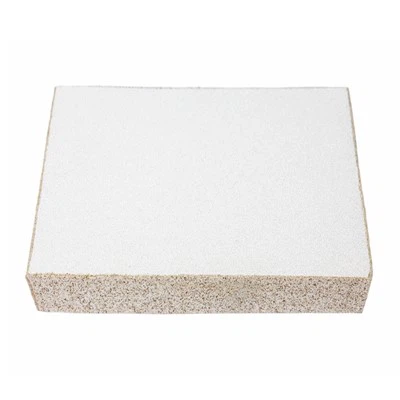
Alumina Ceramic Foam Filter

Product Overview


Alumina Ceramic Foam Filters are engineered for the metallurgical filtration of molten aluminum and aluminum alloys. Featuring an open-cell, three-dimensional interconnected reticulated structure, these filters capture and absorb micro-inclusions through cake filtration, depth filtration, and sieve mechanisms. Applied in gravity, low-pressure, and high-pressure die casting, they reduce oxide films, dross, and refractory particles, improving the mechanical and pressure-tight properties of cast components.

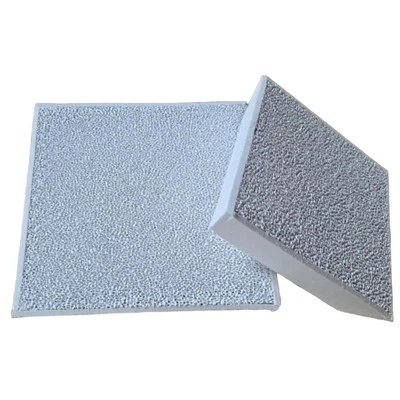


Material & Construction


Chemical Composition:

High-purity alpha-Al2O3 (>= 90%), with specific mineralizers added to optimize high-temperature sintering behavior.


Microstructure:

Open-cell reticulated sponge replica structure with uniform pore distribution and smooth ligament surfaces.


Refractoriness:

Service temperature up to 1100 deg C, maintaining structural integrity under continuous thermal load.


Edge Sealing:

Integrated refractory ceramic fiber gaskets (fiber gasket/expanding edge) applied along the filter perimeter to prevent molten metal bypass and heat loss.


Filtration Characteristics


Filtration Mechanisms:

Combines surface cake filtration for macro-inclusions with tortuous-path depth filtration for sub-micron particles.

01

Inclusion Removal Efficiency:

Effective in capturing non-metallic inclusions, spinel particles, and oxide films >= 15 um (depending on PPI selection).

02

Flow Dynamics:

Minimizes turbulence during gating system entry while maintaining a stable and predictable metal flow rate.

03

Chemical Inertness:

Non-reactive with molten aluminum; does not introduce chemical contamination or gas into the melt.

04


Al Ceramic Foam Filter


Applications

Casting Methods:
Gravity sand casting
Permanent mold (metal mold) casting
Low-pressure casting
High-pressure die casting (HPDC) transfer systems


Alloy Grades:
Wrought aluminum alloys (Series 1xxx to 8xxx)
Foundry aluminum alloys (A356, A380, ADC12, etc.)


Placement Positions: Runner cups, horizontal runner systems, tilt-pour basins, and direct-pour risers.


Technical Specifications


Parameter

Standard Range / Value

Test Method / Standard

Main Material

alpha-Al2O3 >= 90%

X-ray Fluorescence (XRF)

Pore Density (PPI)

10, 20, 30, 40, 50, 60 PPI

Optical Image Analysis

Porosity (%)

80% to 90%

Archimedes' Principle

Bulk Density (g/cm3)

0.38 to 0.52

Geometric Measurement

Compressive Strength (MPa)

>= 0.6 (at room temperature)

Universal Testing Machine

Flexural Strength (MPa)

>= 0.4

Three-Point Bending Test

Max. Service Temperature

1100 deg C

High-Temperature Dilatometry

Thermal Shock Resistance

>= 5 cycles (900 deg C to room temp, air quench)

Visual Inspection After Quenching


Filter Selection Guide


Filter PPI

Average Pore Size

Primary Foundry Application

Typical Alloy Types

10 PPI

~2.0 mm

Large structural castings, high flow-rate runner systems

3xxx, 5xxx series

20 PPI

~1.2 mm

General automotive castings, transmission housings

A356, A380

30 PPI

~0.8 mm

Cylinder heads, high-integrity pressure castings

A356, 6061

40 to 60 PPI

~0.5 to 0.3 mm

Precision aerospace castings, thin-walled electronics enclosures

High-purity wrought alloys


Manufacturing & Quality Control


Production Process:

Polyurethane foam impregnation, slurry coating extraction, drying, and high-temperature shuttle kiln sintering at 1650 deg C.

Dimensional Control:

Automated CNC cutting and ultrasonic sizing to maintain dimensional tolerances within +/- 1.0 mm.

Al2O3 Ceramic Foam Filter


Quality Inspection Protocols:
 

Raw Material Testing:

Particle size distribution analysis of raw alumina powders.

In-Process Checks:

Density and porosity verification per production batch.

Shedding Test:

Ultrasonic vibration simulation to ensure zero ceramic particle shedding before packaging.

Visual Sorting:

100% manual inspection for cracked ligaments, deformed edges, or blocked pores.


Customization & OEM

Geometric Shapes:

Square, rectangular, circular, and custom trapezoidal profiles tailored to specific gating box designs.

Dimensions:

Available from 50 mm up to 600 mm (length/diameter); thickness ranging from 15 mm to 50 mm.

Gasket Options:

Unsealed edges, ceramic fiber paper wrapped, or expandable intumescent gasket applied for tight sealing inside steel/cast iron filter boxes.

Packaging:

Vacuum-sealed inner polyethylene bags packed in export-grade reinforced corrugated cartons with inter-layer foam separators.


fAQ


Q: How do I select the correct PPI for my casting weight and alloy type?

A: Selection depends on the metal flow rate, casting wall thickness, and inclusion size limits. For heavy structural castings (weight > 100 kg), 10 PPI or 20 PPI is recommended to maintain fast fill times. For high-integrity automotive or aerospace components requiring tight mechanical properties, 30 PPI or 40 PPI is standard. Consult our engineering team with your pouring weight and gating design for specific recommendations.

Q: What prevents the ceramic filter from releasing particles into the molten aluminum?

A: High sintering temperatures (1650 deg C) create complete ceramic bonding across all reticulated nodes, establishing a high cold-crushing and thermal shock strength. Routine quality checks include physical vibration tests to screen out loose particles before dispatch, ensuring no filter debris enters the metal stream.

Q: Do these filters require preheating before pouring?

A: Yes. Alumina ceramic foam filters should be preheated inside the gating system to 600 deg C to 800 deg C for at least 15 to 30 minutes prior to pouring. Preheating prevents thermal shock, avoids premature solidification of the leading edge of the aluminum melt, and ensures smooth initial metal entry.

Q: Can these filters withstand the corrosive nature of modified aluminum melts (e.g., sodium or strontium)?

A: Standard alpha-alumina formulations exhibit chemical stability against commercial aluminum alloys treated with standard grain refiners and modifiers. For aggressive fluxes containing high fluoride concentrations, customized high-density formulations are available upon request.

Q: What are the standard dimensional tolerances and packaging specifications?

A: Standard length and width tolerances are held within +/- 1.0 mm, and thickness within +/- 0.8 mm. Filters are individually stacked with interleaving paper or foam padding, vacuum-sealed in plastic film to prevent moisture absorption, and packed in heavy-duty export cartons or wooden pallets.

Q: What is the minimum order quantity (MOQ) for custom-shaped or non-standard size filters?

A: For standard catalog dimensions, trial orders start at one master carton. For custom geometries, non-standard thicknesses, or specific gasket applications, MOQ is determined by the tooling setup and kiln batch requirements. Contact our technical sales team with your 2D/3D CAD drawings for evaluation.

As one of the most professional alumina ceramic foam filter manufacturers and suppliers in China, we're featured by quality products and good service. Please feel free to buy high-grade alumina ceramic foam filter made in China here from our factory. Contact us for more details.

Al Ceramic Foam Filter, Thermal shock resistant ceramic filter, Refractory Ceramic Filter

(0/10)

clearall